CODEerts
Odoo 20
Auto Archive for Odoo 20
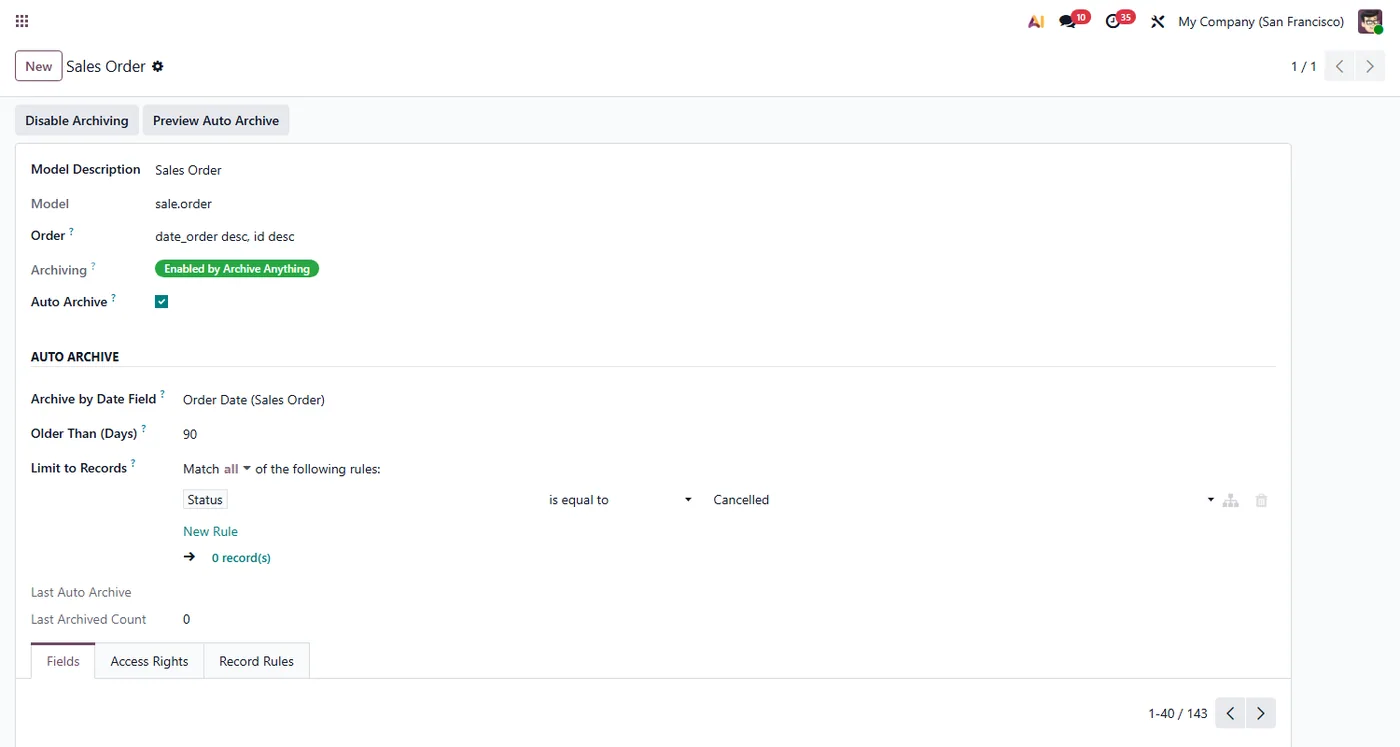
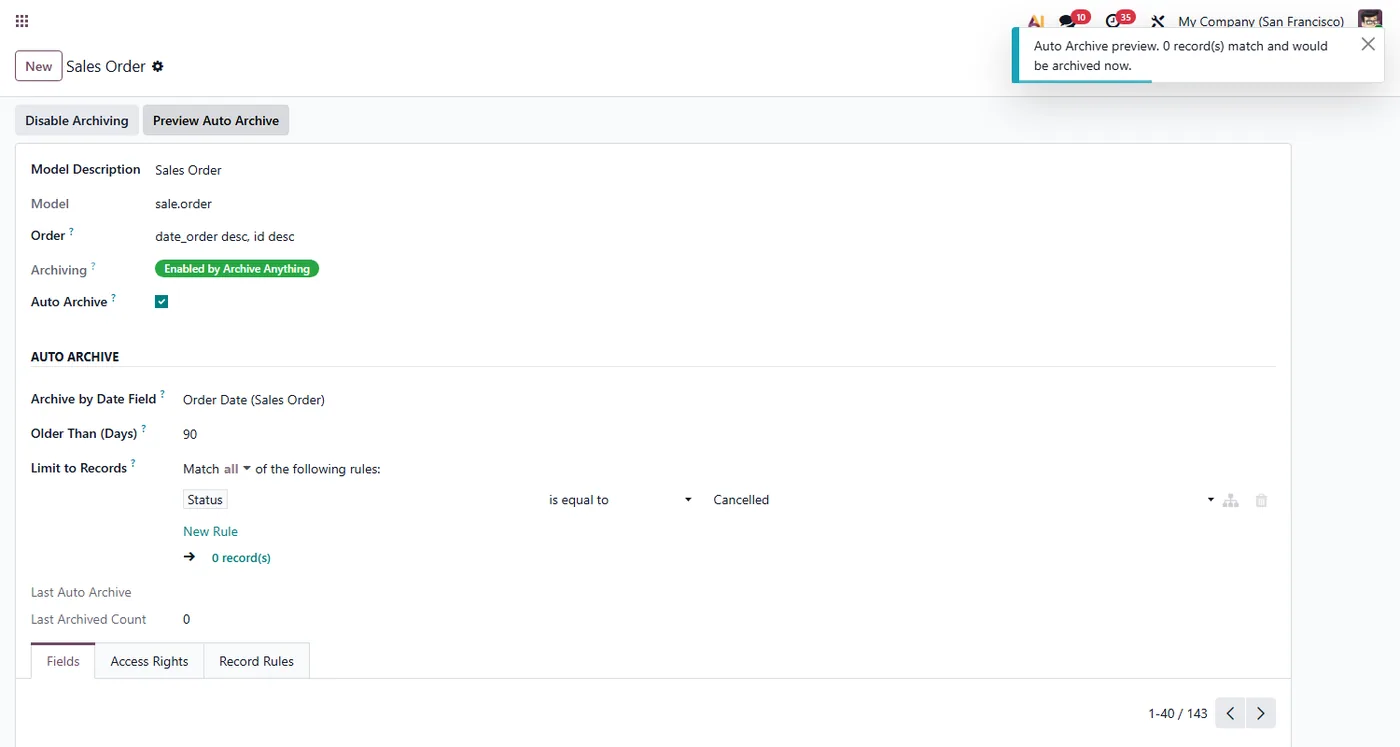
Automatically archive old records on any model after a number of days, with an optional filter, on a daily schedule.
Availability on Odoo 20
Which versions this module supports.
Auto Archive runs on Odoo 20. This page covers availability, licensing and how to install it on 20 specifically. For the full feature breakdown, see the main Auto Archive page.
| Odoo version | Status | Available |
|---|---|---|
| Odoo 20 | Supported (this page) | Yes |
| Odoo 19 | Supported | Yes |
| Odoo 18 | Supported | Yes |
In short
What it does.
A summary for Odoo 20. The full breakdown is on the main Auto Archive page.
- Automatically archive records older than a number of days, per model
- Choose which date field drives the age, such as order date or creation date
- Optional record filter, for example only cancelled orders, using Odoo's domain editor
- Daily scheduled action does the work, with last run time and count recorded
Other Odoo versions
Running something else?
The same module, published per version.
Questions
About Auto Archive on Odoo 20.
Does Auto Archive work on Odoo 20?
Yes. Auto Archive is published for Odoo 20 on the official Odoo Apps Store, and we maintain it across the versions listed above.
How do I install it on Odoo 20?
Buy or download it from the Odoo Store listing for 20, add it to your addons path or install it directly on Odoo.sh or Odoo Online where supported, then update the apps list and install. We can do the install for you if you would rather not.
What happens when I upgrade Odoo?
We maintain the module across current major versions, so an upgrade path exists as long as the target version is listed above. Tell us before you upgrade and we will confirm.
Full details
Everything Auto Archive does.
Features, screenshots, setup and FAQs on the main module page.
Open the Auto Archive pageReady to make Odoo work the way your business does?
Book a free call CODEerts
 is a team of certified Odoo partners and full-stack engineers. We implement, customise and support Odoo ERP, then build the software around it.