CODEerts

Odoo eCommerce
Odoo eCommerce: A Storefront Built on Your Real Stock and Ledger
The argument for Odoo eCommerce is not that it is the best storefront builder. It is that the storefront is reading your actual stock, your actual prices and your actual customers, so there is no connector to maintain and no nightly sync to reconcile.
Written by Muneeb AhmadOdoo 19 and 17 Certified, Functional Consultant
01
What Odoo eCommerce actually is
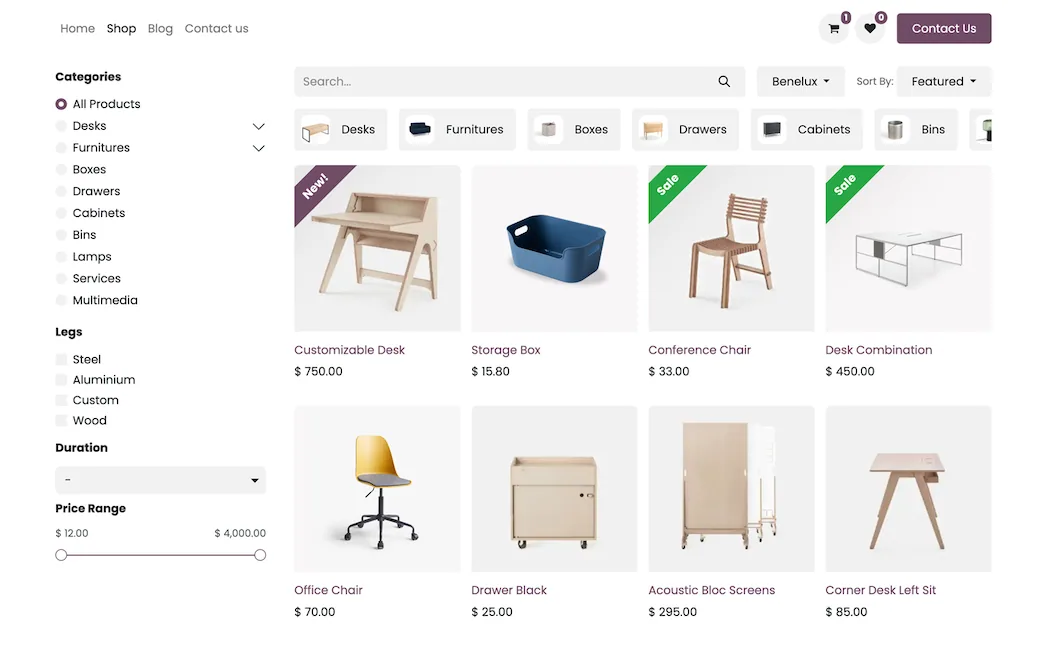
Odoo eCommerce publishes your existing product catalogue as a shop, takes orders through a cart and checkout, and drops those orders into the same sales, stock and accounting flow as every other channel.
It is worth being direct about where it stands. As a pure storefront builder, dedicated platforms are ahead: they have more themes, deeper merchandising features and far larger app ecosystems. Odoo's advantage is not the shop window, it is what sits behind it. When the online store is one channel among several, the shared foundation removes an entire category of work that connector-based setups never stop paying for.
If eCommerce is your only channel and always will be, evaluate honestly. If it is one of several, the case is strong.
02
Products online, and the variant question again
Any product can be published to the website with a flag. Its description, images, attributes and price come from the same record the rest of the business uses, which means a price correction happens once.
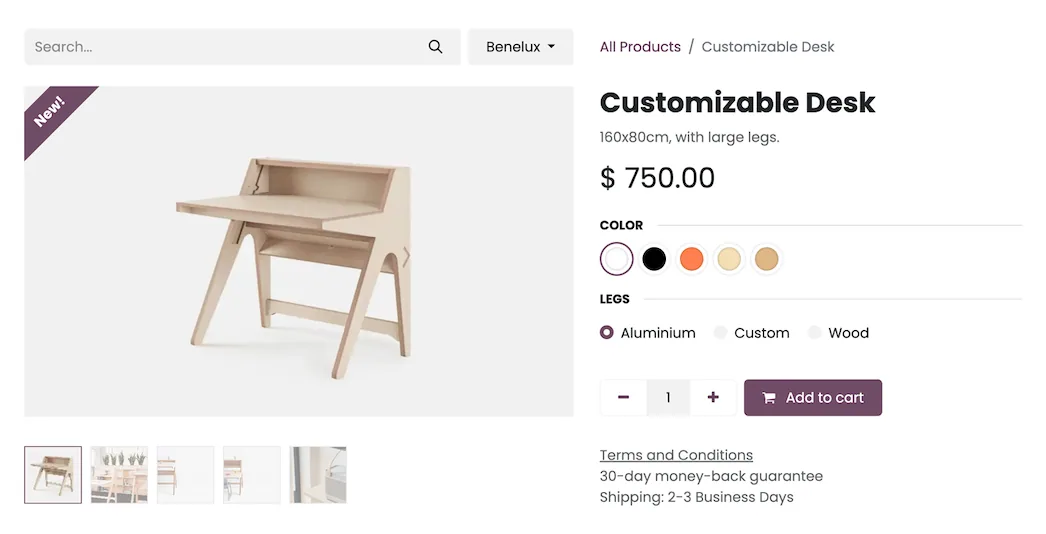
Variants become the selectable options on the product page. Attributes can render as dropdowns, radio buttons or colour swatches, and an attribute value can carry a price extra, so a larger size can cost more without a separate product. Each combination is a real variant with its own stock, which is what allows the page to show one size as unavailable while the others sell.
The same discipline as elsewhere applies. Variants are for genuinely the same product in different forms. Accessories and add-ons are optional products or cross-sells, not attributes.
03
Pricing, taxes and the things that differ by country
Website pricing runs through pricelists, and a pricelist can be scoped to the website specifically. That is how you run promotional online pricing without touching your trade prices, or sell in a second currency to a different market.
Tax display is the detail that catches people out. Business-to-consumer selling generally requires prices shown inclusive of tax, business-to-business generally does not, and Odoo handles both through the tax configuration and fiscal positions rather than through the website settings. Get this decided before launch, because changing how prices display after customers have seen them is worse than getting it right slowly.
Screenshots of Odoo are the property of Odoo S.A. and are shown here to illustrate the app they depict.
Payment and delivery, which decide your launch date more than the theme does
Payment providers are configured per website, and several are integrated out of the box. Which ones are actually available to you depends on your country, your entity and sometimes your bank, and this is reliably the thing that delays an eCommerce launch. Wire transfer works with no provider and is a reasonable fallback for B2B.
Delivery methods can be flat rate, weight or price based, or integrated with a carrier that returns live rates and generates labels. Carrier integrations vary by region and some sit in Enterprise. As with POS hardware, confirm your specific provider in your specific country before you build a plan around it.
Where Odoo eCommerce will fight you
Theming has limits without front-end work. The drag-and-drop building blocks cover a lot, and the result looks professional. Getting to a highly distinctive, brand-led design usually means real front-end development, and on Odoo Online that development has constraints because custom modules are not permitted.
Performance needs attention. Large unoptimised product images are the usual cause of a slow shop. The platform will serve whatever you upload, so the discipline has to come from your side.
SEO basics are present, not automatic. Titles, descriptions, clean URLs and sitemaps are supported and need to be filled in. A catalogue published with default metadata will not rank, and no platform fixes that.
The app ecosystem is smaller. Where a dedicated platform has twelve competing apps for a niche need, Odoo may have one or none, and the answer becomes custom development. Price that in before assuming feature parity.
How it connects to everything else
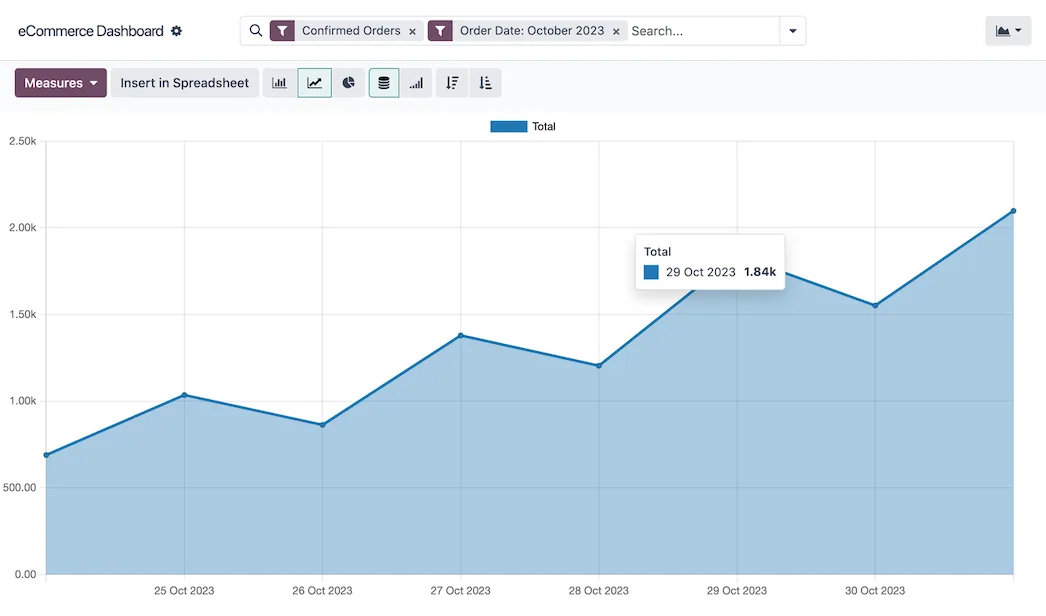
An online order is a sales order like any other: it reserves stock, creates a delivery, and produces an invoice through the normal flow. The website customer is a portal user on the same partner record your sales team uses. Inventory is shared with your shop and warehouse. Marketing can target the same contacts, and abandoned carts are visible to sales rather than locked inside a separate tool.
That last point is underrated. In a connector-based setup, the eCommerce customer and the CRM contact are two records that resemble each other. Here they are one.
Where to start
Confirm your payment provider and your delivery carrier are actually available for your country before committing to a launch date. Decide tax display for your market and set it before customers see a price. Publish a small, well-photographed subset of the catalogue rather than everything at once, and write real metadata for those pages. Then place a live order yourself, follow it through delivery and invoicing, and fix what you find before you promote the shop.
FAQ
Odoo eCommerce, answered.
Is Odoo eCommerce free?
The eCommerce app is in Community, so the storefront, cart, checkout and product pages carry no licence cost. Payment providers charge their own transaction fees, and some delivery carrier integrations depend on Enterprise, so the total cost is not zero even though the app is.
How does it compare to Shopify?
Shopify is the stronger pure storefront: more themes, a far bigger app ecosystem, and a smoother merchandising experience. Odoo wins when the shop is one channel of a larger operation, because stock, pricing, customers and accounting are shared records rather than a synced copy.
Does the online store share stock with my shop and warehouse?
Yes, and this is the main reason to choose it. A sale online, at the till and from the warehouse all move the same stock. You can also choose per product whether to show availability, allow backorders or hide out-of-stock items.
Can I run different prices online and in store?
Yes, through pricelists. A pricelist can be assigned to the website specifically, so online pricing, promotions and currency can differ from your counter or B2B pricing without duplicating any products.
How do product variants appear online?
Attributes become selectable options on the product page, and each combination maps to a variant with its own stock and price. Attributes can be shown as radio buttons, colour swatches or dropdowns, and an attribute can add to the price.
What payment methods are supported?
Several providers are integrated out of the box, and availability varies by country. Wire transfer works with no provider at all. Confirm your specific provider and country combination before planning launch, because this is the most common late surprise in an eCommerce rollout.
Related
Keep exploring.
Other Odoo apps we have written up in the same depth.
With CODEerts
Want this set up properly?
We are certified Odoo partners. We implement, customise and support Odoo eCommerce, and we publish our own apps on the Odoo Store.
See how we can helpBook a callReady to make Odoo work the way your business does?
Book a free call CODEerts
CODEerts is a team of certified Odoo partners and full-stack engineers. We implement, customise and support Odoo ERP, then build the software around it.